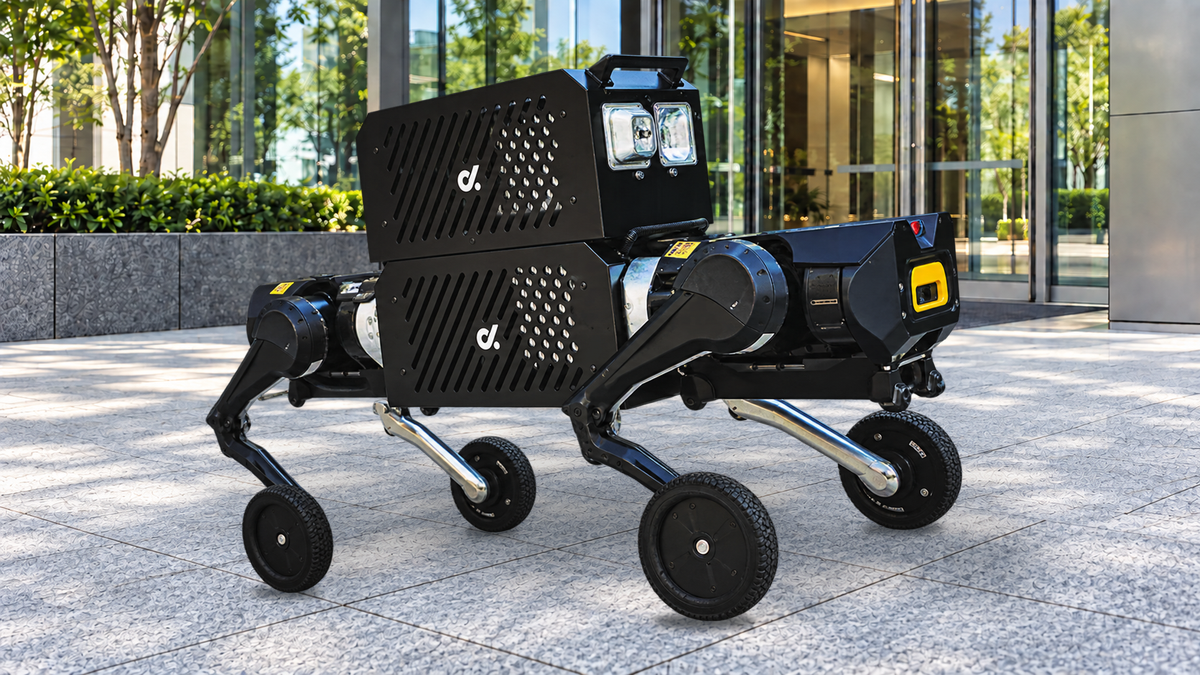
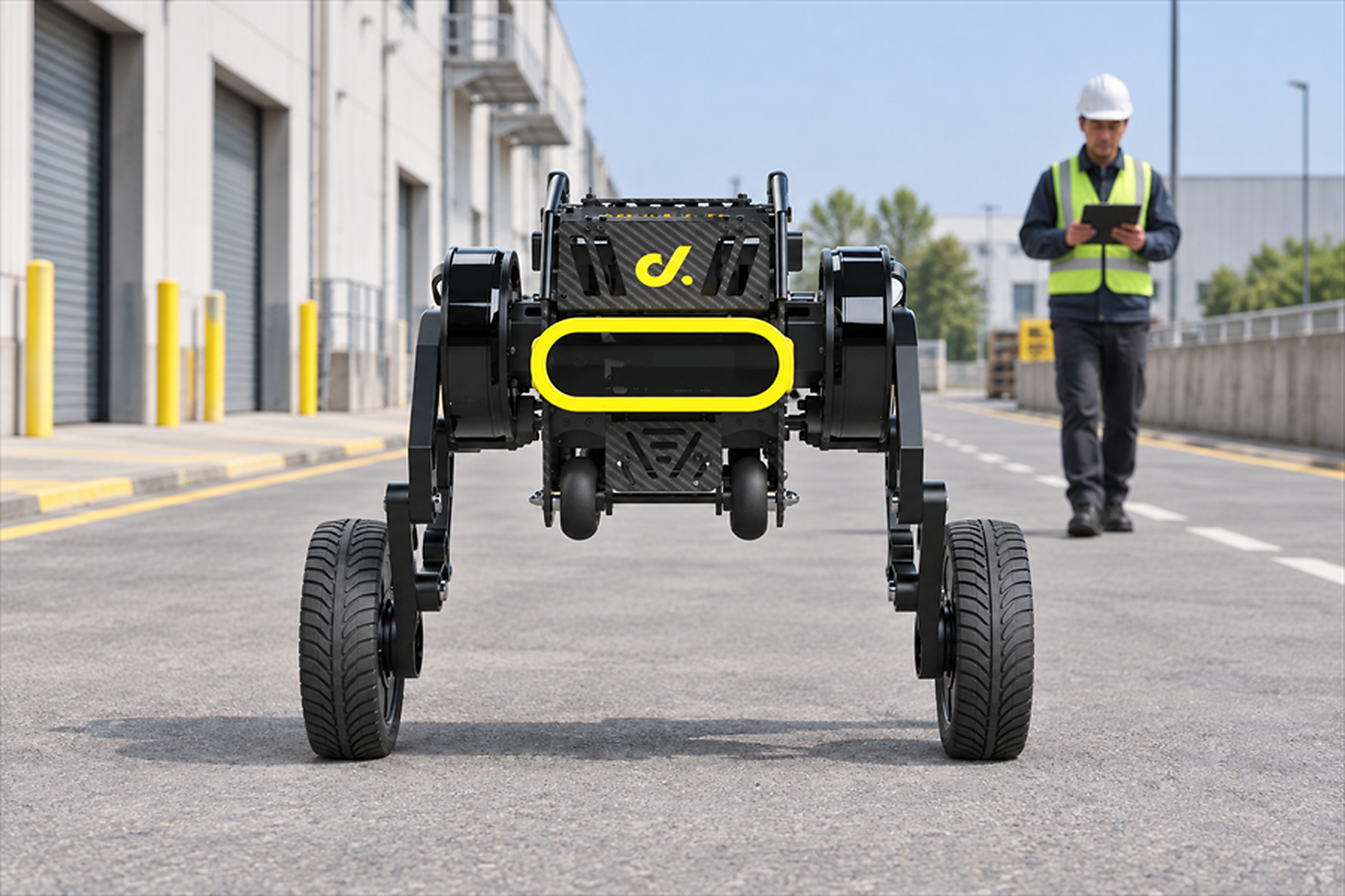
On an inspection round, a technician may need both hands to check equipment and record results. TITA is a wheeled-bipedal robot platform that can carry task equipment when configured for the job.
The public UWB follow-me setup uses the operator's wristband as its tracking target. A robot-mounted UWB module supplies positioning data to SDK-based motion control, allowing the technician to lead without steering continuously.
Use this optional configuration for supervised tool carrying, operator-led mobile data collection, or robotics research on controlled routes. It does not make TITA an autonomous inspector. Keep the controller available for SDK-mode handover and verify load, route, work pauses, handover, and target-loss procedures.
How the TITA Follow-Me Robot Configuration Works
TITA's UWB person tracking setup connects a wearable wristband, a robot-mounted module, and software using the robot's control interface. The wristband supplies the target for following; the system does not identify the operator through facial recognition.
What You Need Before Deployment
Confirm the optional UWB module, wristband, mount, cable, deployment files, support plan, software compatibility, and route clearance.
Validate the Installation Before Walking a Route
Use the controller to enter SDK mode, move the powered wristband left and right near TITA's front, and confirm that the robot turns toward it. This verifies the target-to-motion chain, but does not measure following distance, loaded travel, target-loss recovery, or route safety.
Plan a Route Trial That Answers Buying Questions
Use a clear controlled route, secure proposed equipment, agree on stop conditions and handover, and supervise the robot. Record versions, wristband position, payload, mount, surface, clearance, turns, pauses, stops, restarts, and manual interventions.
Where Hands-Free Following Fits into Daily Work
Inspection Rounds with Tools at Hand
The technician wears the UWB wristband while TITA carries secured instruments and parts between inspection points.
Operator-Led Mobile Data Collection
TITA transports sensing and logging equipment while the engineer observes, stops at checkpoints, and records findings.
Human–Robot Interaction Experiments
Researchers can use the wristband as a repeatable following target while studying handover, route behavior, and operator interaction.
Frequently Asked Questions
Does the Operator Still Need a Controller? Yes. A controller is still required to enter and exit SDK mode.
Is Following Included with Every Robot? No. TITA specifications list Auto Following as optional.
What Happens if the Wristband Signal Is Lost? The available instructions do not specify verified stopping or reacquisition. Request a demonstration.
Does the Following Package Include Obstacle Avoidance? Target positioning does not prove obstacle avoidance. Confirm the installed configuration.
Can We Customize the Following Behavior? Use the SDK through documented interfaces and establish access requirements with the integration team.
Match the Configuration to Your Task
Match the configuration to a representative route and equipment. Share payload, mounting concept, surface, clearance, operating time, software version, and required behavior at turns, stops, interruptions, and target loss.
Contact us to confirm availability and compatibility and plan a supervised demonstration.