Disaster prevention and field response work often begins in places where conditions are uncertain. Flood control sites, drainage systems, industrial recovery areas, mines, utility corridors, and reconstruction zones may involve debris, water, poor visibility, uneven ground, or limited access. Before a team sends people into these areas, reliable field information matters. That is why the emergency response robot is becoming a practical tool for inspection, mapping, data collection, and rescue support.
We build TITA and Diablo for this kind of demanding work. They can enter hard places, carry useful sensors, send back field information, and reduce unnecessary risk for people on site. In disaster prevention, rescue support, reconstruction work, and field operations, our goal is simple. We help field teams move faster, see more clearly, and make decisions with better confidence.
Why Emergency Work Needs Mobile Robots
Emergency work includes the rescue moment, plus the prevention and recovery work around it. Drainage channels need to be checked before heavy rain. Industrial parks need patrols after equipment incidents. Underground spaces may need mapping before crews enter. Roads and temporary routes often need inspection after storms, floods, or structural damage.
Mobile robots help teams gather useful information first. They can move into areas that are hard to reach, collect images and route data, carry sensors, and repeat patrols without fatigue. This gives field crews a clearer view of the site before deciding where people and equipment should go next.
Our wheeled legged design is built for that kind of work. The wheels support faster travel over longer routes, while the legged structure helps the robot handle uneven ground, clutter, slopes, and low obstacles. Teams can compare our current robot platforms for inspection, mapping, delivery, and emergency rescue to choose the right fit for the site, payload, route, and development plan.
TITA for Inspection, Mapping, and Field Data
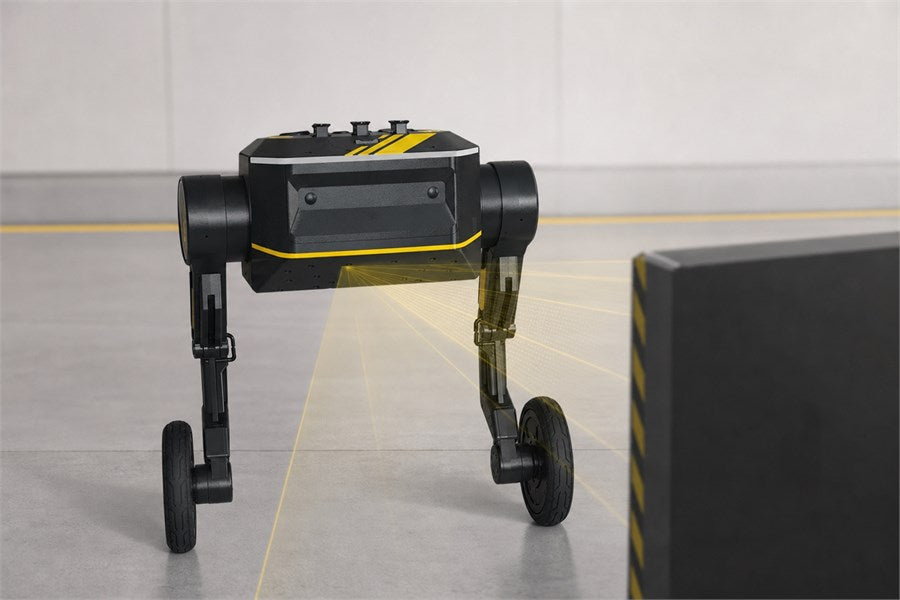
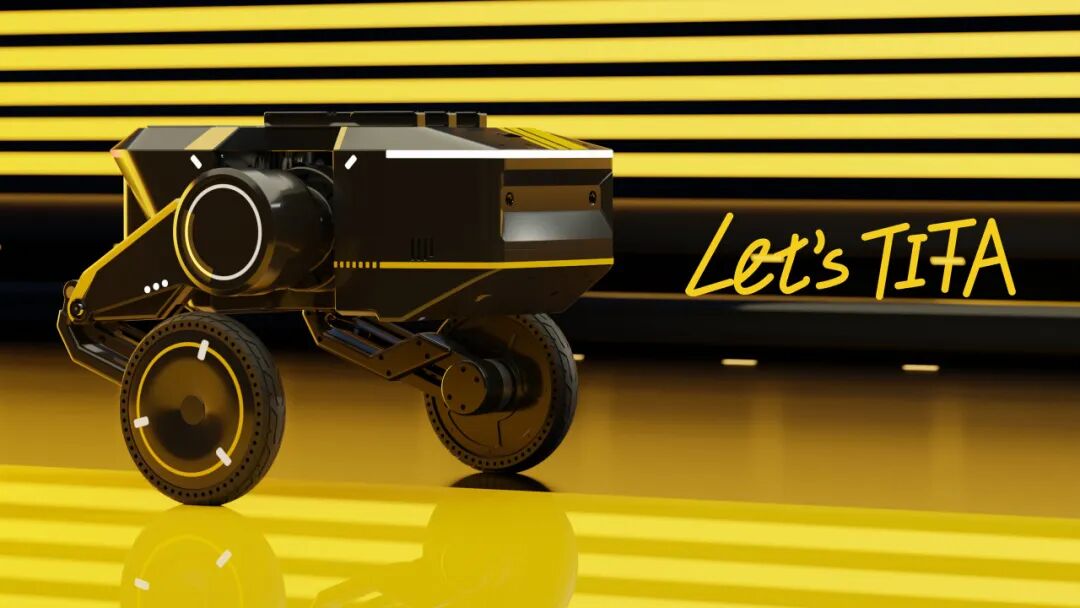
TITA is our 8 DoF wheeled bipedal robot platform for inspection, mapping, patrol, filming, education, and secondary development. In emergency related projects, it is a good fit for tasks that need site visibility first, such as checking drainage routes, scanning reconstruction areas, inspecting industrial parks, or carrying sensors through complex terrain.
For field teams, the key value is simple. TITA can carry a 10 kg moving payload for cameras, mapping devices, communication hardware, and other equipment. Its standard maximum speed is 3 m/s, with up to 5 m/s available through API control in suitable projects with proper safety conditions. When routes include rough ground or small obstacles, its 20 cm forward jump and 30 cm vertical jump give teams more options than a flat wheeled platform.
TITA helps teams see and judge the site before people move in. Built-in cameras provide route visibility from a distance. Inertial sensors help the robot understand body posture during turns and movement. SPAD sensors and the ultrasonic sensor support object detection around equipment, narrow paths, or temporary obstacles. Remote image transmission keeps the field view available to the team, while remote speaker support can help with patrol communication or on-site guidance.
For longer sessions, hot swappable batteries provide about 2 hours of total runtime from the battery set, depending on load and movement. TITA Bridge and TITA Tower support accessory mounting and 3D mapping work, and our TITA tutorials and developer manuals help teams handle ROS 2, SDK access, setup, and Ubuntu development.
Diablo for Agile Movement and Compact Field Support
Diablo is our direct drive self-balancing wheeled leg robot. It suits emergency response projects that need a compact robot for quick inspection, patrol testing, sensor integration, control development, or moving support items across uneven routes.
In the field, Diablo’s compact size makes it easier to use in tighter spaces and temporary work areas. It travels at up to 2 m/s for close-range patrols and route checks. In standing mode, it can carry a 4 kg load while staying agile. In creeping mode, it can carry up to 80 kg when the task calls for slower, steadier movement with heavier items.
Diablo is also easy for developers to build on. It supports an open SDK and can work with added hardware such as LiDAR, anti-collision modules, and GPS. This makes it useful for perception tests, positioning work, route testing, and custom control logic. Our Diablo product documents include user manuals, SDK resources, and setup materials for teams preparing their own projects.
TITA vs Diablo for Emergency Response Projects
| Project Need | TITA | Diablo |
|---|---|---|
| Best emergency fit | Inspection, mapping, field data collection, wide area patrol, and sensor carrying | Compact field support, agile patrol testing, control development, and carrying tasks |
| Movement style | 8 DoF wheeled bipedal movement for complex routes, uneven ground, and posture adjustment | Self balancing wheeled leg movement for agile operation, rough roads, and smaller spaces |
| Payload use | 10 kg moving payload for sensors, mapping equipment, cameras, or communication modules | 4 kg standing mode load for lighter equipment and 80 kg creeping mode load for heavier carrying tasks |
| Development value | ROS 2 support, SDK and API access, accessory expansion, and 3D mapping options | Open SDK support, hardware add-ons such as LiDAR, anti collision modules, and GPS |
| When to choose it | Choose TITA when the project depends on field sensing, mapping, inspection routes, and a larger mobile payload | Choose Diablo when the project needs a smaller wheeled legged robot for agile testing, carrying, and custom control |
How These Robots Support Disaster Prevention and Rescue Work

In disaster prevention and rescue support, TITA and Diablo help teams act earlier and see the site more clearly. Their value comes from entering complex areas, bringing back useful field information, and reducing repeated manual checks in places with higher risk.
Prevention work often depends on routine patrols and early signs. TITA can support route checks, mapping, and condition monitoring in industrial parks, mines, drainage routes, and utility corridors. When a team needs steady inspection over a wider area, TITA gives them a practical way to build a clearer picture of the environment before problems become harder to manage.
Rescue support asks for flexible movement near the working area. Diablo’s compact body and self balancing motion make it useful around rough roads, temporary routes, and constrained spaces. It can carry light equipment in standing mode, handle heavier carrying tasks in creeping mode, and support added hardware for field testing.
After a disaster, recovery teams need to know what changed on the ground. Both robots can help inspect damaged areas, scan routes, carry devices, and collect on-site data for planning. Robot vision hardware can also strengthen this work. Our stereo GMSL2 robot vision accessory supports stereo imaging and depth sensing workflows for Jetson based development, robot perception experiments, and field testing.
Open Cooperation for Real Field Projects
Every emergency response robot project starts with a real site and a real problem. The right choice depends on the route, terrain, payload, sensors, software needs, and how the robot will be used by the field team. We work with partners on disaster prevention, drainage inspection, industrial patrol, underground corridors, smart parks, mines, reconstruction support, and custom field robotics projects.
If a project is still in the planning stage, our team can help review the site conditions, sensing needs, payload setup, and development path before platform selection. Teams can contact Direct Drive Tech to discuss TITA, Diablo, accessories, and custom integration. We are ready to help build field robot solutions that make inspection earlier, response faster, and on-site decisions clearer.